

Where spring colour meets pollinators
Spring at Furzey is full of colour, but it is full of movement too. Early spring brings blossom, fresh growth and trees alive with pollinators, while later in the season the garden fills with rhododendrons, azaleas and other nectar-rich flowers.
Across April and May, that combination of colour and activity makes Furzey feel especially vibrant. It is not only a beautiful time to visit, but a lively one too, with bees, hoverflies, butterflies and other flower-visiting insects moving through the garden as the season unfolds.
More than bees
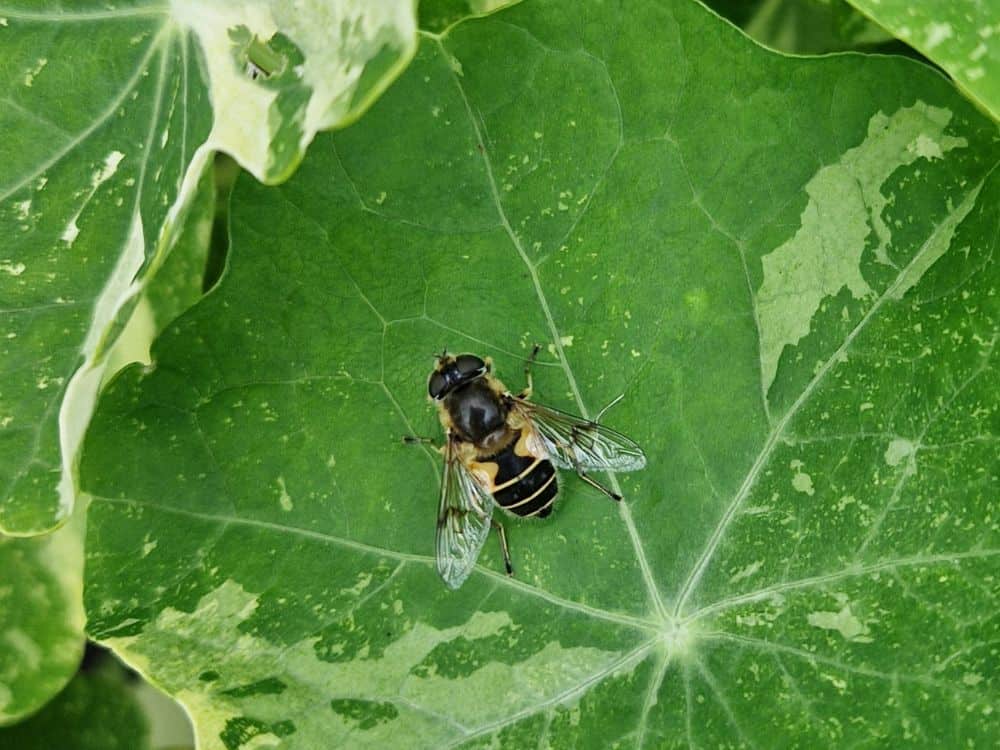
Hoverfly on nasturium leaf
Bees may be the pollinators most people notice first, but they are only part of the story.
At Furzey in spring, pollinators can include bumblebees, solitary bees, hoverflies, butterflies and other insects visiting flowers for nectar and pollen.
Butterflies help with pollination as they feed, even if they are not as efficient as bees, while hoverflies are some of the most useful and easily overlooked pollinators in the garden.
That variety is part of what makes spring at Furzey so rewarding. The garden does not simply come into flower. It comes alive.
Flowers that draw them in
Many of the plants that define spring at Furzey are also valuable to pollinators. Varied spring colour is often a sign of a garden offering nectar and pollen to a wide range of insects and Furzey is no different.
As the season moves on, that sense of activity only grows. Enkianthus campanulatus is a particular favourite with bees, often alive with their low hum as you walk nearby.
Across the garden, pollinator-friendly plants continue to appear through the trees, shrubs and borders, creating a rich and changing source of nectar as spring progresses. Foxgloves are one of the later flowers to emerge, and in May the wildflower meadow opens to visitors, offering another lovely place to see pollinators at work among the flowers. The meadow is also home to beehives, and we sell honey from the resident bees in our shop.
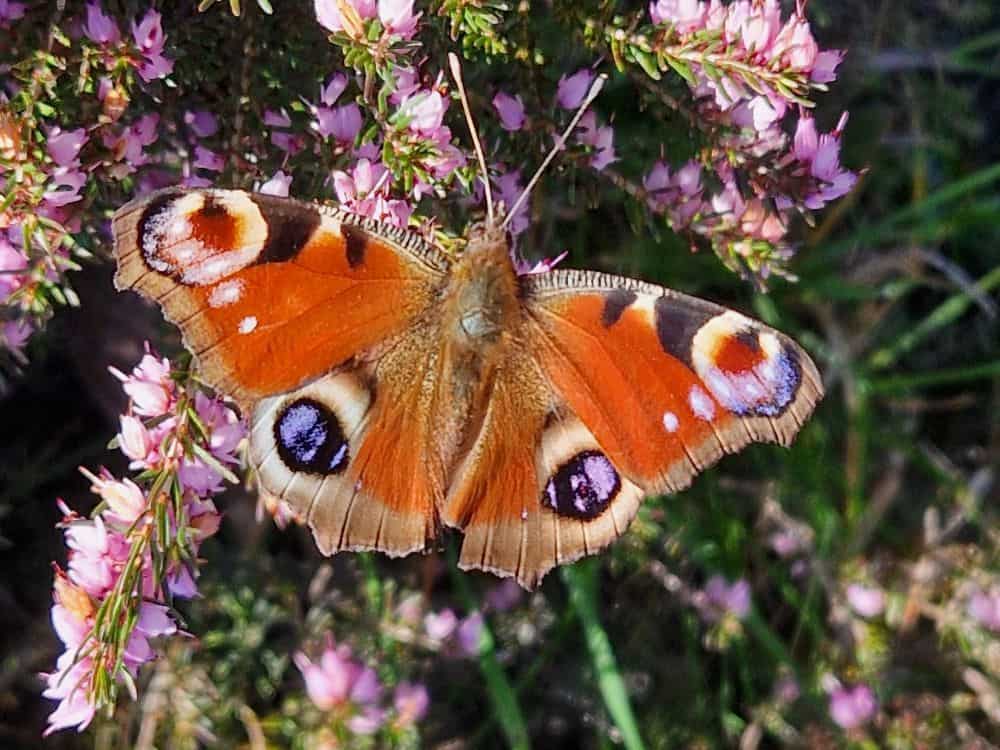
Peacock butterfly on heather
A garden full of movement
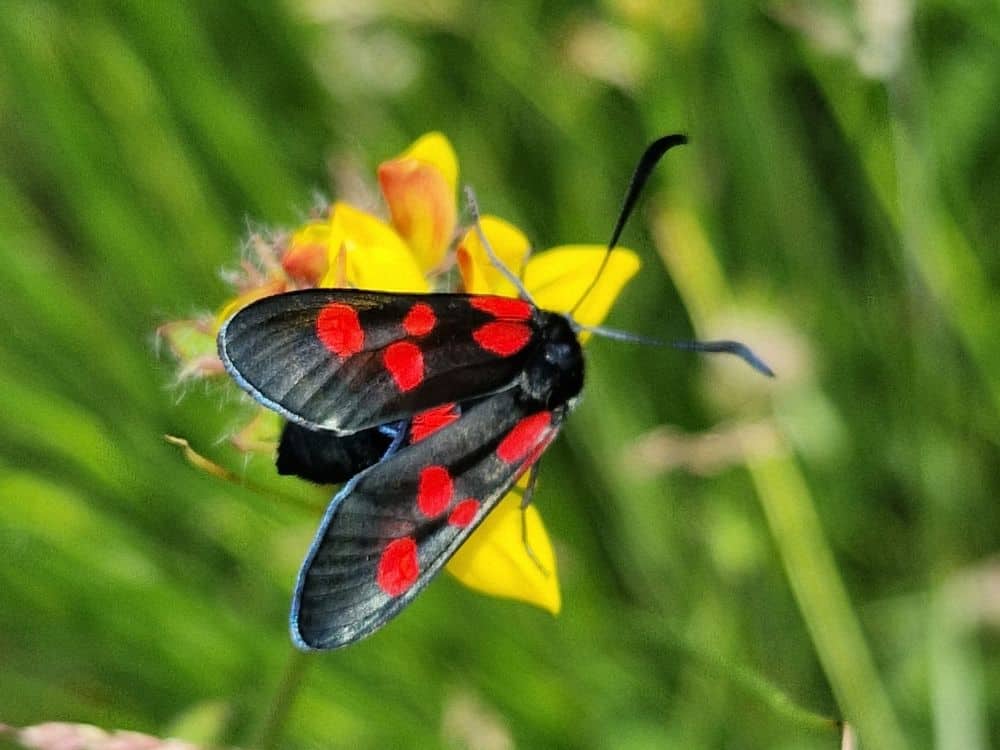
Burnett moth on wildflower
One of the pleasures of visiting Furzey in spring is that the garden feels active from every angle.
You may arrive for the rhododendrons and azaleas, then notice bees working through the flowers, hoverflies drifting between blooms or butterflies pausing in a sunnier corner.
Early blossom brings pollinators into the trees, while later spring shrubs and borders keep that sense of movement going at ground level.
It adds another layer to the experience of the garden, making it feel not only colourful, but full of life.
Planting for pollinators at home
A garden filled with a range of flowering plants across the season can do a great deal to support pollinators. Perennials, wildflowers and easy-care shrubs can all help support pollinators at home. Salvias, nepeta, verbena bonariensis and echinacea can bring long-lasting colour through the borders, while wildflowers like knapweed and oxeye daisy are especially valuable for bees and other insects. Easy-care shrubs such as lavender, hebes and buddleja can also provide a reliable source of nectar, even in smaller gardens.
If you are visiting a garden centre, look out for pollinator friendly stickers that help identify plants that attract our garden pollinators.
The same planting choices that bring more colour and variety to a garden can often make it more welcoming to bees, hoverflies, butterflies and other pollinators too.
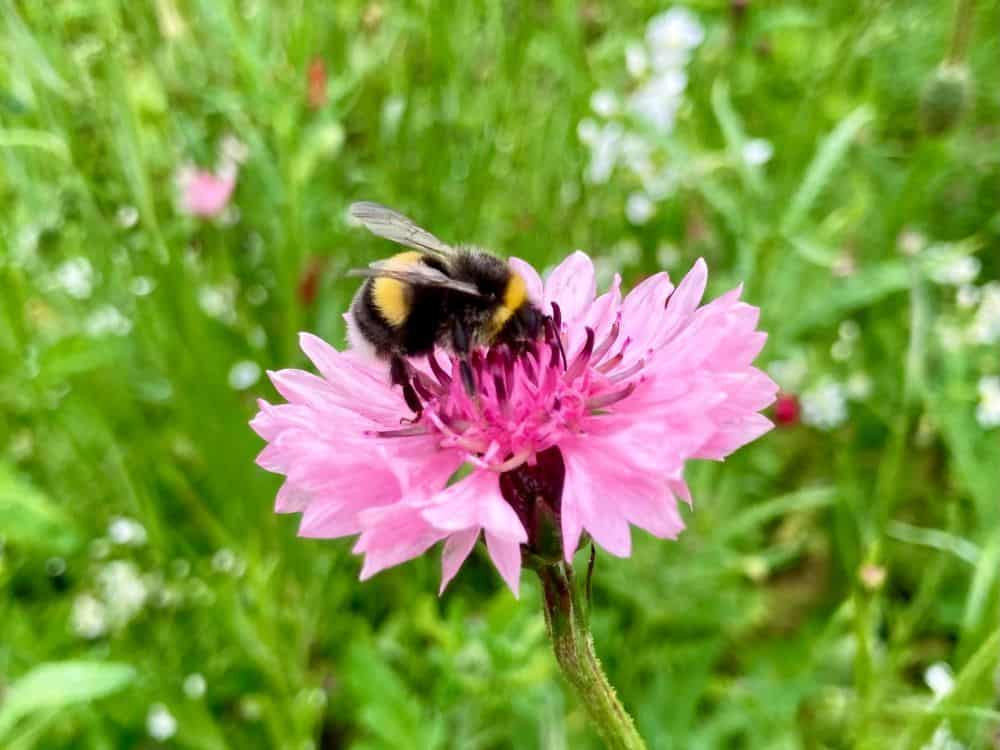
Bee on cornflower
At Furzey, spring colour is never just something to look at. It is part of a living garden, where bees, hoverflies, butterflies and other pollinators help make every walk feel that little bit more special. We hope you will come and experience Furzey in Full Colour for yourself.
Visiting Furzey in spring
If you are choosing one time to visit Furzey, spring offers some of the garden’s most memorable and distinctive sights. From glowing rhododendrons and azaleas to flowering shrubs, fresh growth and layered late spring borders, it is also a season when pollinators bring an extra sense of life to the garden. Together, that colour and movement make spring one of the most rewarding times to explore Furzey.