
What to see in February and March
18 February 2025
Each year we welcome the gentle shift from winter’s hush to the lighter, longer days of spring. The air begins to change. Subtle scents drift through the gardens, birdsong gathers momentum and fresh colour returns to the borders, offering a renewed sense of possibility for the season ahead.
From late February, signs of spring begin to emerge across the gardens. As warmth slowly reaches the soil, plants respond in kind and Furzey stirs into life with delicate blooms, fresh foliage and the welcome return of birds, bees and early insects.
The first snowdrops and crocus appear like quiet brushstrokes across the ground. Their pale, intricate flowers gradually give way to swathes of daffodils lighting up the borders, joined by blossom forming on trees and shrubs throughout the garden.
By March, attention turns skyward to our magnificent collection of mature magnolias as they burst into bloom. Among them are Magnolia kobus and Magnolia stellata, planted in the 1930s and still offering a breathtaking display each spring. Nearby, one of our oldest and largest specimens, Rhododendron macabeanum, first planted in the late 1920s, brings bright yellow flowers set against striking silver foliage.
Camellias also take centre stage at this time of year. Camellia saluenensis greets you as you walk up from the lake, while Camellia ‘Tricolour’ brightens the path with raspberry ripple blooms that feel almost too perfect to be real.
March is the perfect moment to pause beneath the delicate flowers of Corylopsis pauciflora. Its clusters of soft yellow blooms are a welcome early source of nectar, drawing bees eager to refuel after the long winter months.
Elsewhere, our winter heather beds continue to glow in shades of soft purple, including Erica darleyensis ‘Furzey’, a named pre-war variety that forms part of the garden’s living history.
Over the winter months, our team have carefully pruned some of our older trees and shrubs. Thoughtful, well-timed hard pruning encourages vigorous new growth, improves air circulation and allows more light to reach the heart of the plant. For mature specimens, this rejuvenation is essential. It strengthens structure, prolongs life and ensures they continue to flourish for generations to come. The work also opens new vistas across the gardens, creating a renewed sense of space as spring unfolds.
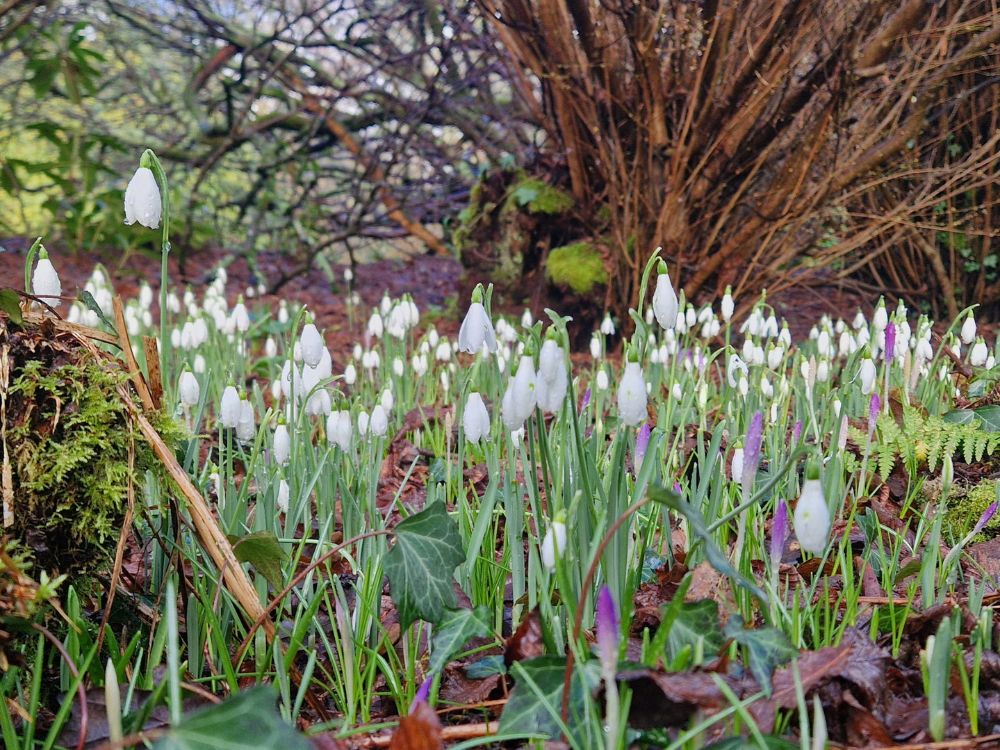
Snowdrop and crocus carpet lawns

Swathes of crocus adorn lawns
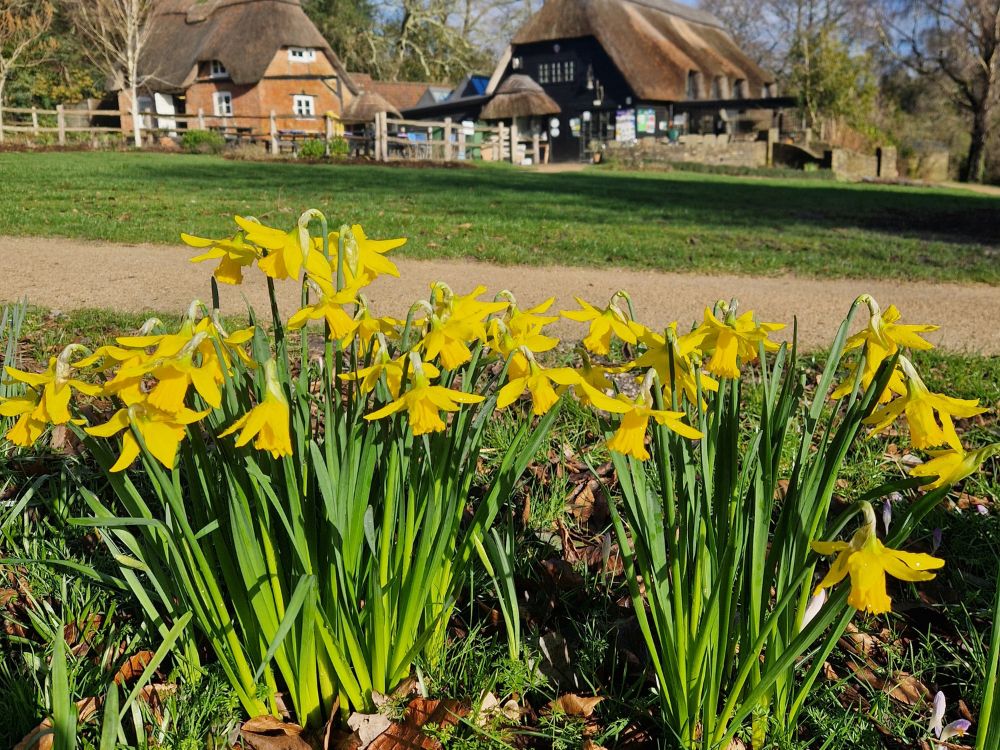
Daffodil in the sinshine
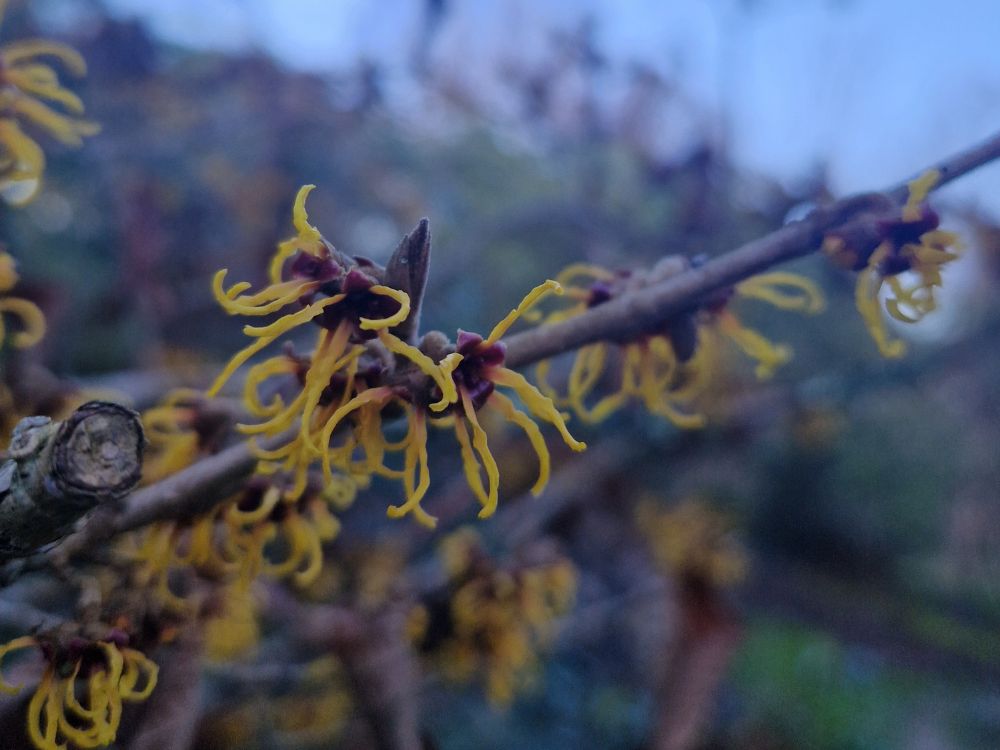
Witch Hazel
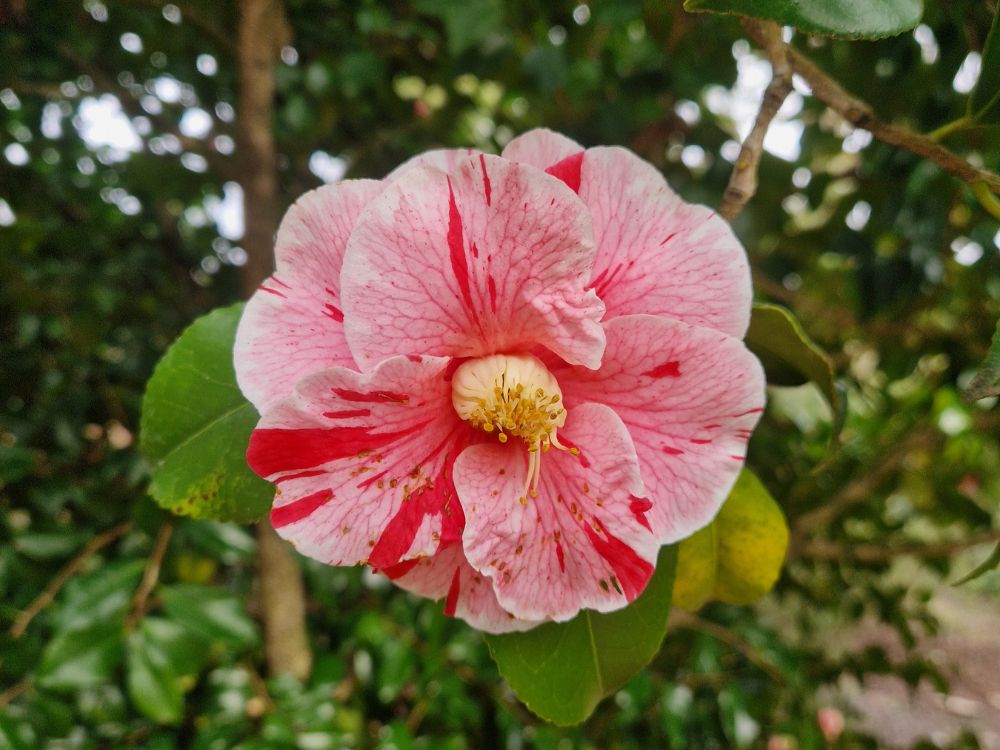
Raspberry Ripple flowers of Camellia Tricolour
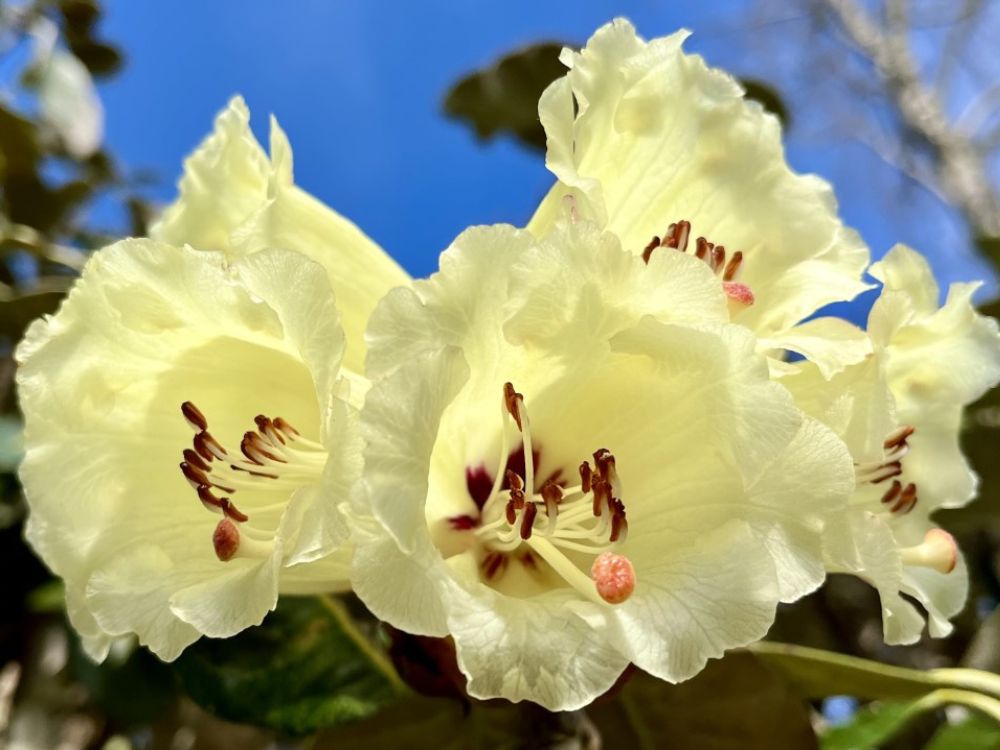
Rhododendron Macabeanum
If you are looking for a quiet and tranquil escape this spring, Furzey Gardens is just the place. Visit midweek to enjoy a calm and relaxing escape from the day to day.
The gardens and tea rooms are open seven days a week, 10am – 4pm. Well behaved dogs on a short lead are allowed at Furzey Gardens until 31 March.