
Gardening tips and advice: March 2026
13 March 2026, by Abbie Jones, Landscape Gardener at Furzey Gardens
If February was about quietly noticing the turn, March asks for something slightly different. Daylight is slowly returning, reaching further into the afternoon and lingering gently as evenings lengthen. Buds swell with greater confidence. Birdsong grows fuller, more layered, less tentative. And yet, despite these rising notes of spring, this March has not rushed forward.
Unlike last year’s drier early season, this winter has carried more moisture in the ground. The soil remains heavy in places, slow to warm, easily compacted under careless feet. It is a reminder that gardens do not follow memory, they respond only to the moment and the conditions around them.
So March, this year, feels less like a surge and more like a steady unfolding. Hopeful, yes. But measured.
March in your garden: respond, don't react
This is a month that rewards attentiveness.
Where the ground is saturated, resist the temptation to dig simply because the calendar suggests it is time. Working wet soil risks compaction, squeezing out the air that roots depend on. Instead, wait for those small signs of readiness: the surface beginning to crumble rather than smear, the soil lifting rather than clumping.
Seeds can continue under glass, light levels are now strong enough to support sturdier growth. February sowings will need pricking out and potting on, turned regularly towards the light. But outdoor sowing should follow soil conditions, not dates in a book. Gardening in March is about responding to the present, not repeating the past.
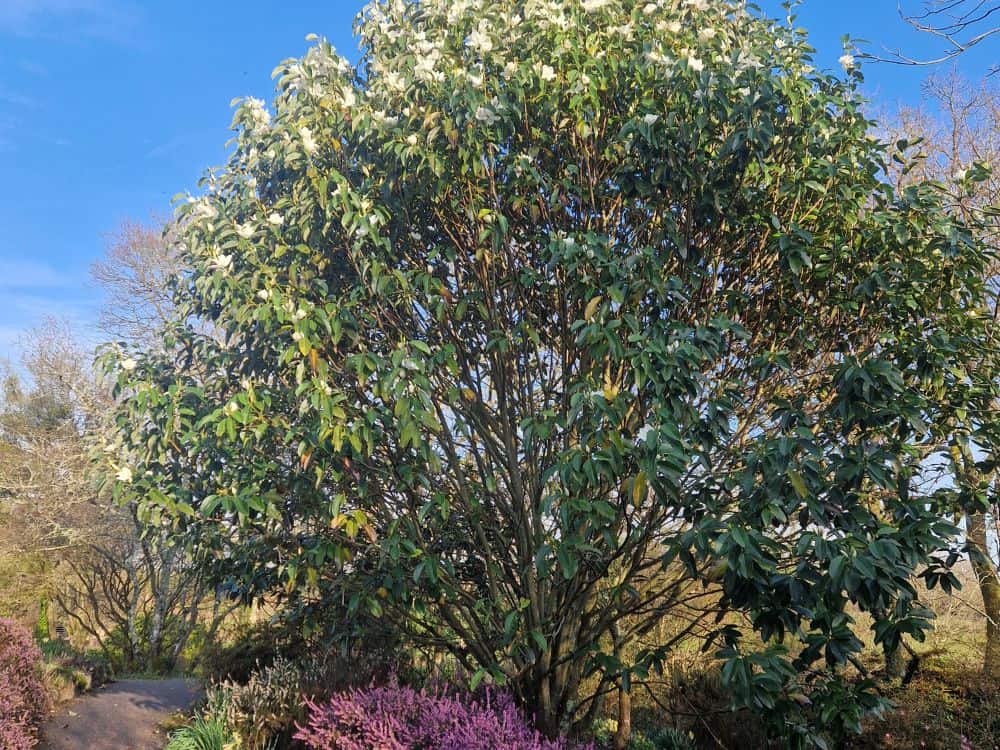
Michelia Doltsopa and Erica Darleyensis
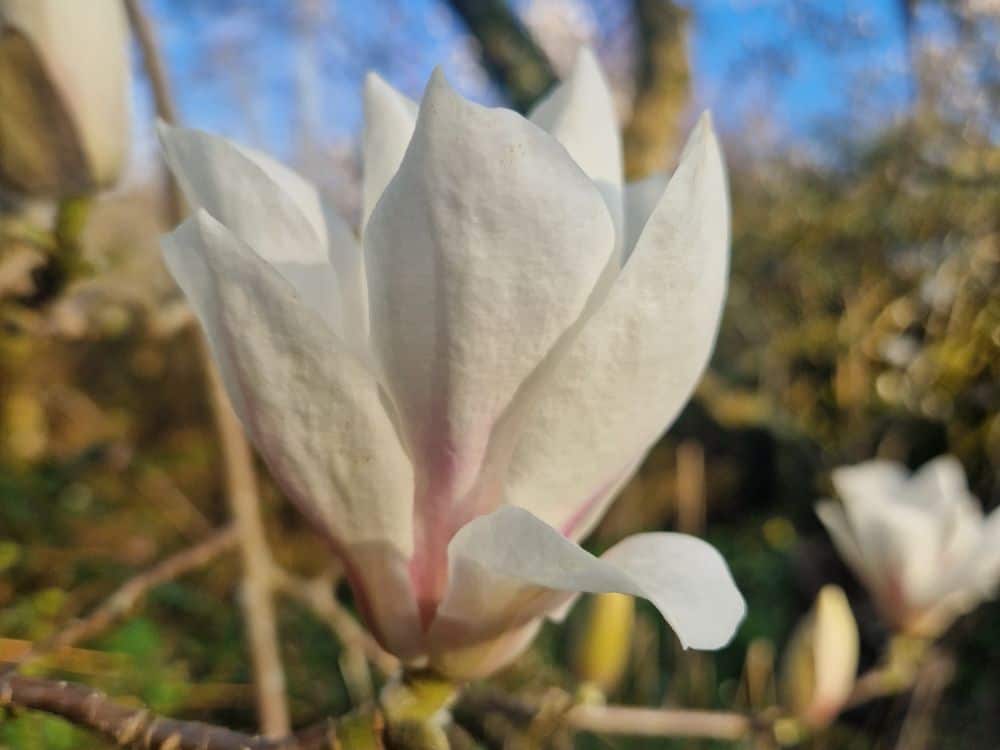
Magnolia soulangeana ‘Alba’
Mulches laid earlier continue to protect and nourish. Pruned shrubs begin to show the earliest signs of renewed energy. Much of the work now is quiet observation.
March at Furzey Gardens is a particularly exciting time, because alongside the quiet watching, there is purposeful movement. This is when we begin pruning those plants that respond generously to an early spring cut. Butterfly bush (Buddleja davidii) are reduced firmly, encouraging long, flower-laden shoots for late summer. Hardy fuchsias are cut back to low framework buds, making way for fresh, vigorous growth. Elder (Sambucus) is shaped while still dormant, and Hibiscus cut to stimulate strong new flowering stems. The vibrant stems of dogwood (Cornus) are coppiced or thinned to ensure the richest colour next winter.
Other plants to keep in mind at this time include bluebeard (Caryopteris), Himalayan honeysuckle (Leycesteria), Russian sage (Perovskia), smoke bush (Cotinus), late-flowering clematis, cherry laurel (Prunus laurocerasus), and of course one of the garden’s most popular shrubs, hydrangea. Many of these will benefit from a careful prune, although the technique differs from plant to plant. Rather than cover them all here, we’ll focus a little further on hydrangeas.
Hydrangeas in March - pruning with understanding
Hydrangeas are often the plants that cause uncertainty at this time of year. Secateurs hover. The question lingers: how much should be cut? The answer depends entirely on the type.
Oakleaf hydrangeas (Hydrangea quercifolia) flower on old wood, meaning this year’s buds were formed last summer. In March, pruning should be light. Remove only dead, damaged or congested stems, shaping gently if needed. Heavy cutting risks removing the coming display.
Mophead hydrangeas (Hydrangea macrophylla) behave similarly. Simply remove the faded flower heads by cutting back to the first strong pair of healthy buds beneath. Any further cutting should be limited to clearly dead stems. Patience here protects summer colour.
In contrast, paniculata hydrangeas (Hydrangea paniculata) flower on new growth and are far more forgiving. March is an ideal time to reduce last year’s stems to a strong framework of buds. This encourages sturdy shoots and generous flower heads later in the season.
Likewise, arborescens hydrangeas (Hydrangea arborescens) bloom on new wood and can be cut back more confidently. Some gardeners reduce them to low framework buds for vigorous regrowth, while others leave a little height to help support the weight of summer blooms.
Across all types, the principle remains simple: prune according to how the plant flowers. When unsure, it is often wiser to do less.
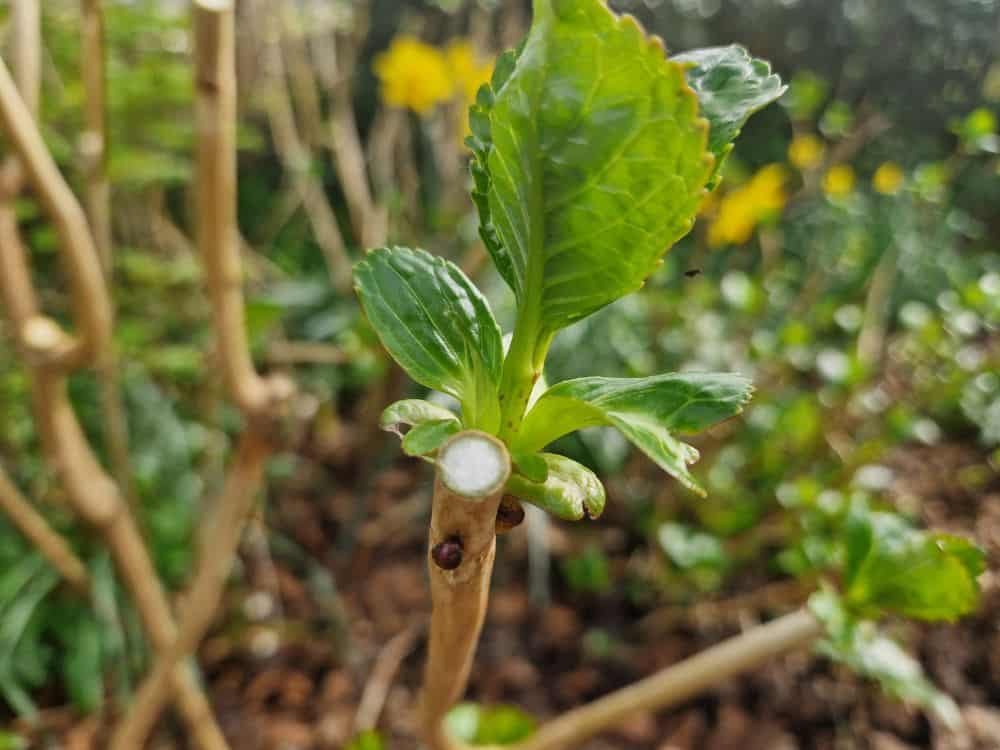
Close up of Mophead hydrangea stalk after pruning
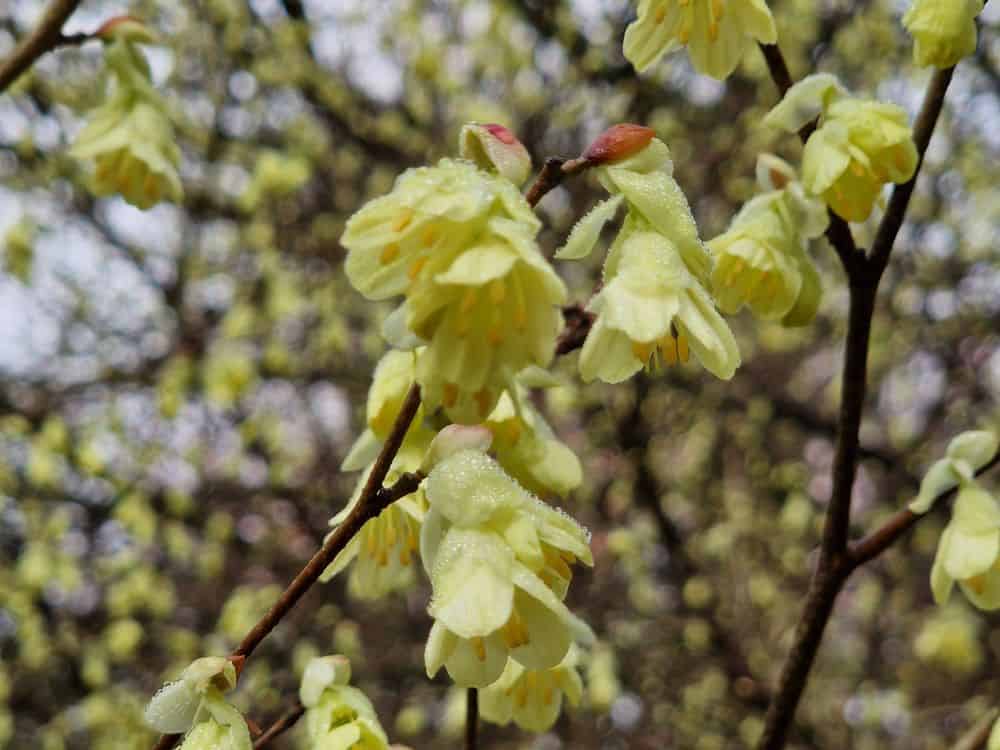
Corylopsis Pauciflora
Supporting wildlife - gardens finding their voice
One of the clearest changes now is sound.
Birds are no longer occasional visitors but active participants in the season. The garden carries their conversations – robins, blackbirds and finches are claiming space, strengthening bonds, and preparing for nesting. Their increased energy means increased need.
Continue feeding birds while natural food sources are still emerging, and provide fresh water regularly. Resist over-tidying hedges and borders. Seed heads, leaf litter and sheltered corners offer vital protection as nesting begins. In listening to birds, we are reminded that spring is not an instant transformation, but a gradual crescendo.
March at Furzey - steady momentum
Here at Furzey, the woodland floor is shifting almost imperceptibly. Snowdrops are fading with quiet grace, making space for the next wave of bulbs. Early daffodils press upwards, punctuating the ground with brightness.
The rain has intensified greens – moss vivid against darker bark, evergreen structure standing calm and steady. Buds are fuller now, their outlines unmistakable even from a distance. Growth is no longer imagined; it is visible.
Behind the scenes, our work continues. Seedlings in the nursery move into their next stage of development. Recently pruned shrubs are monitored for balanced regrowth. For our supported gardeners with learning disabilities, this mirrors the season itself: steady progress, patient effort, confidence growing quietly over time. Each small task contributes to something larger taking shape.
March carries both energy and restraint. It invites us to feel hopeful – to notice the longer days and rising birdsong but also to respect the weight of wet soil and the reality of lingering chill. It teaches us not to assume, not to rush, not to treat this year as a repetition of the last.
Gardens thrive when we respond to their present conditions. Step lightly where the ground is soft. Prune with understanding rather than habit. Sow when soil welcomes it. Feed the birds while they gather strength.
What to see in March at Furzey Gardens
At Furzey this month, the garden offers quiet signs of the season turning. Magnolia buds swell and burst, unfurling their elegant white blooms, while camellias continue their steady display along the paths.
Early azaleas hint at the bounty of colour still to come in peak spring, and the delicate yellow flowers of Corylopsis hang lightly among the branches. Scents begin to fill the air as clusters of tiny white flowers appear on our skimmia shrubs. Elsewhere, visitors enjoying the view from the tea room terrace may catch the delightful chocolatey fragrance of Azara microphylla.
March also heralds the unveiling of our gunnera plants once more, its first green leaves slowly stretching outward, small but certain reminders that spring is on its way.
In just a few weeks, Easter will be upon us, the gardens will be full of flowers, birdsong and families. From 28 March – 12 April kids can take part in our Furzey Fairy Easter Egg Hunt. The Easter Bunny has been hopping through the gardens, delivering egg baskets to the Furzey fairies. Explore the gardens, find all the egg baskets and claim your chocolate Easter prize!
The gardens and tea rooms are open seven days a week, 10am – 4pm. We can’t wait to welcome you.
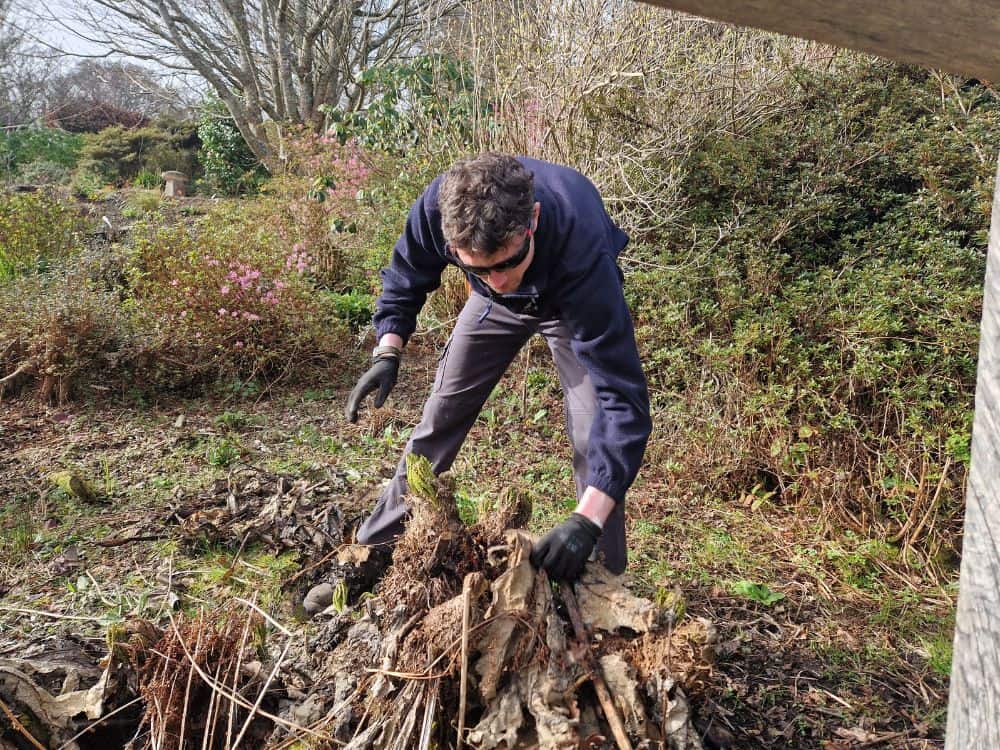
Uncovering the gunnera

Fresh new shoots of gunnera
This article originally appeared as the monthly In The Garden column in the Lymington Times, buy the paper on the second Friday of every month to read the next column first.